
Product Details
Compared with rutile in crystal lattice structure, anatase features lower hardness and refractive index. Though inferior in thermodynamic stability, anatase can maintain a metastable state for a long time; it will undergo irreversible transformation into rutile when heated above 700°C. In terms of optical properties, anatase boasts higher transparency in the near-ultraviolet range.
Titanium(IV) oxide is extensively applied in UV-resistant fabrics, skin creams and cosmetic products. It also functions as a high-efficiency photocatalyst, being indispensable in self-cleaning glass, ceramics, air purification and chemical processes. Furthermore, it can enhance the opacity of paper, and it serves as a critical raw material for the production of titanium and alloy materials in the metallurgical industry.
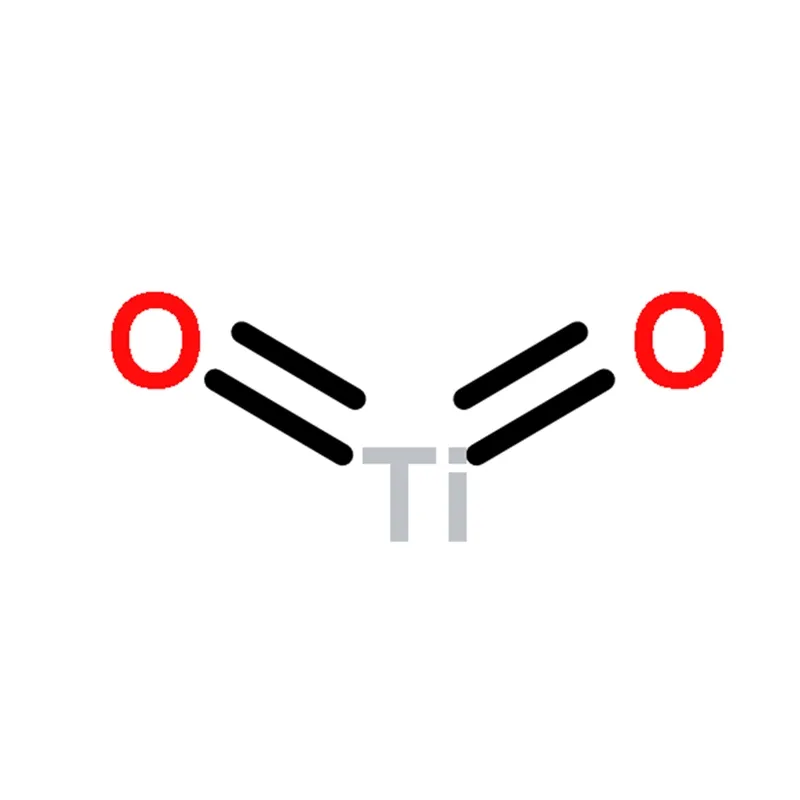
TITANIUM DIOXIDE Chemical Properties
| Melting point | 1840 °C |
| Boiling point | 2900 °C |
| density | 4.26 g/mL at 25 °C(lit.) |
| Fp | 368°C |
| form | powder |
| color | White |
| Specific Gravity | 3.9 |
| Water Solubility | Insoluble in water, dilute acids, organic acids, and dilute alkalis. |
| Crystal Structure | Tetragonal, P4/mnm |
| crystal system | square |
| Merck | 14,9472 |
| Space group | I41/amd |
| Lattice constant | a/nmb/nmc/nmα/oβ/oγ/oV/nm30.378480.378480.951199090900.1363 |
| Stability: | Stable. Incompatible with strong acids. |
| CAS DataBase Reference | 1317-70-0(CAS DataBase Reference) |
| EPA Substance Registry System | Anatase (TiO2) (1317-70-0) |
Safety Information
| Hazard Codes | Xn |
| Risk Statements | 20-36/37/38 |
| Safety Statements | 26-36 |
| WGK Germany | - |
| RTECS | XR2275000 |
| TSCA | Yes |