

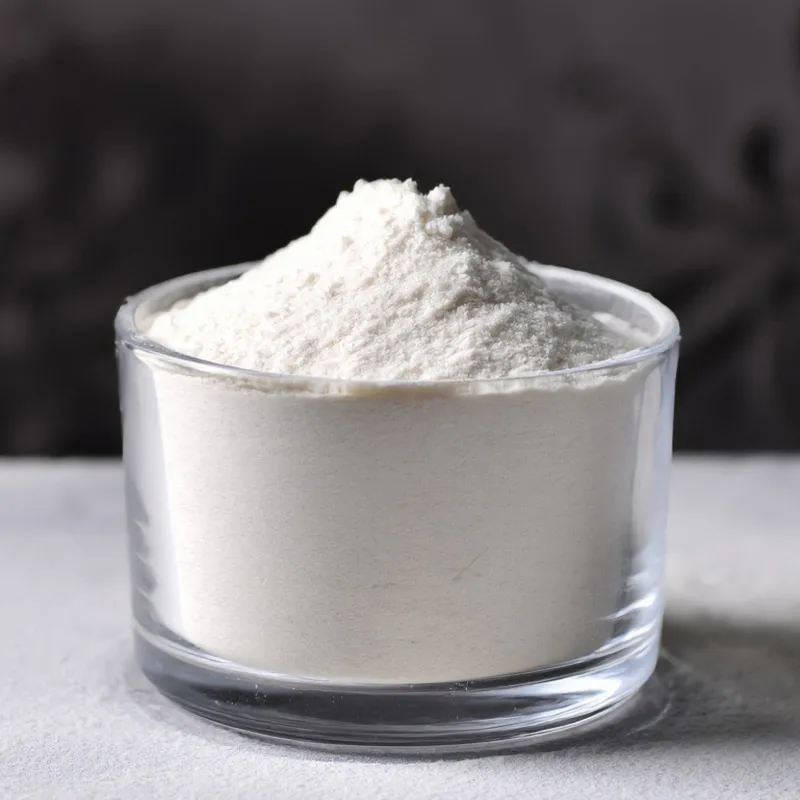
Products Description
4‑Chloro‑3‑methylphenol takes the form of colourless crystals. Its melting point is 66 °C (or 55.5 °C) and boiling point is 235 °C. At 20 °C, one gram of this substance dissolves in 250 mL water, and its solubility rises markedly in hot water. It dissolves freely in organic solvents such as benzene, ether, ethanol, acetone, chloroform and petroleum ether.
This compound is steam‑volatile. It is deployed in organic synthesis for the manufacture of dyes and film preservatives, and it also sees frequent use as a preservative for pharmaceuticals.
Properties
| Density | 1.37 |
| Melting point | 63-65℃ |
| Boiling point | 151° F (NTP, 1992) |
| Refractive index | 1.5403 (73 C) |
| Flash Point | 230° F (NTP, 1992) |
| Vapour Pressure | 0.0±0.4 mmHg at 25°C |
| Precise Quality | 142.018539 |
| PSA | 20.23 |
| logP | 2.354 |
| Solubility | methanol: soluble1g/10 mL, clear, colorless |
| AnalyticLaboratory Methods | Method: EPA-EAD 604; Procedure: gas chromatography with flame ionization detector/electron capture detector; Analyte: 3-methyl-4-chlorophenol;; Matrix: water;; Detection Level: 0.36 ug/L. |
| Appearance | Off white crystals |
| AutoIgnition | 590°C |
| Storage | Ambient temperatures. |
| Chemical Properties | white or pink crystals |
| Physical Properties | Colorless, white, or pinkish crystals with a slight phenolic odor. On exposure to air it slowlybecomes light brown. |
| Color/Form | White |
| Contact Allergens | Chlorocresol is a biocide used for its disinfectant andpreservative properties, in topicals or cutting fluid. |
| Decomposition | When heated to decomposition it emits toxic fumes of phosgene; /and hydrogen chloride;/. |
| Odor | Said to be odorless when very pure, but usually a phenolic odor persists |
| Odor Threshold | detection: 0.1 mg/kg |
| PH | pH = 5.6 in saturated aqueous solution |
| Physical | CHLOROCRESOL; is a pinkish to white crystalline solid with a phenolic odor. Melting point 64-66°C. Shipped as a solid or in a liquid carrier. Soluble in aqueous base. Toxic by ingestion, inhalation or skin absorption. Used as an external germicide. Used as a preservative in paints and inks. |
| pKa | pKa 9.55(t = 25) (Uncertain) |
| Water Solubility | 4 g/L (20 oC) |
| Spectral Properties | Intense mass spectral peaks: 142 m/z (100%), 107 m/z (80%), 144 m/z (32%), 77 m/z (24%) |
| MASS: 3931 (NIST/EPA/MSDC Mass Spectral Database, 1990 version); 1126 (Atlas of Mass Spectral Data, John Wiley and Sons, New York) | |
| RAMAN: 224 (Sadtler Research Laboratories Spectral Collection) | |
| IR: 5721 (Coblentz Society Spectral Collection) | |
| UV: 1303 (Sadtler Research Laboratores Spectral Collection) | |
| NMR: 10933(Sadtler Research Laboratories Spectral Collection); 236 (Johnson and Jankowski, Carbon-13 NMR Spectra, John Wiley and Sons, New York) | |
| Stability | Stable. Incompatible with brass, oxidizing agents, copper, copper alloys. |
| StorageTemp | Store below +30°C. |

Product Application
4‑Chloro‑3‑cresol belongs to the family of phenolic derivatives, serving dual purposes as a preservative and disinfectant.
It also acts as an activator for ryanodine receptors.
Furthermore, it finds application in organic synthesis for producing dyes and film preservatives, and is widely adopted as a preservative within pharmaceutical products.