

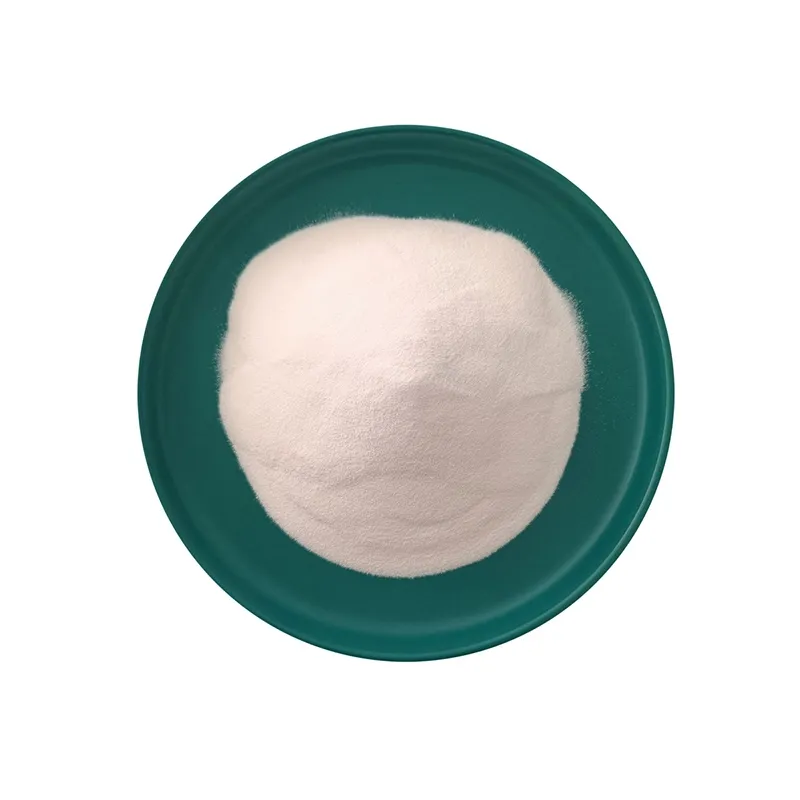
Product Description
Potassium Phosphate (Tribasic, CAS#7778-53-2, K₃PO₄) is a versatile phosphate salt widely used as a pH regulator and buffer component. It exists in monobasic, dibasic and tribasic forms. The classic Gomori buffer is formulated by mixing monobasic and dibasic potassium phosphate in adjustable ratios, achieving stable buffering within pH 5.8–8.0. With excellent water solubility and dependable buffering properties, it supports biochemical testing, molecular biology and chromatography workflows. Beyond lab use, it functions as a fertilizer ingredient and multi-functional food additive. It also finds applications in nonlinear optical materials and organic synthesis reactions.
Potassium phosphate tribasic Chemical Properties
| Melting point | 1340 °C |
| density | 2.564 g/mL at 25 °C(lit.) |
| vapor pressure | 0Pa at 20℃ |
| storage temp. | room temp |
| solubility | water: soluble100mg/mL, clear, colorless |
| form | Solid |
| Specific Gravity | 2.564 |
| color | White |
| Odor | at 100.00?%. odorless |
| Water Solubility | 50.8 g/100 mL (25 ºC) |
| Sensitive | Hygroscopic |
| Merck | 147660 |
| BCS Class | 1 |
| Stability: | Stable. Incompatible with strong oxidizing agents, moisture. |
| CAS DataBase Reference | 7778-53-2(CAS DataBase Reference) |
| EPA Substance Registry System | Tripotassium phosphate (7778-53-2) |
| Hazard Codes | C,Xi |
| Risk Statements | 38-41-34 |
| Safety Statements | 26-39-45-36/37/39 |
| RIDADR | UN 1805 8/PG 3 |
| WGK Germany | 2 |
| RTECS | TC8450000 |
| F | 46244 |
| TSCA | Yes |
| HS Code | 28352400 |
Product Applications
Biochemistry & Laboratory: Preparation of PBS buffer, microbial culture media, Gomori buffer, protein extraction and chromatographic analysis.
Food Industry: Acts as a food additive with emulsifying, foaming and whipping functions.
Agriculture: Used as a phosphorus-potassium fertilizer raw material.
Advanced & Chemical Synthesis: Applied in nonlinear optical devices such as second-harmonic generation; serves as a reagent for dehydrobromination and thiol oxidative coupling reactions.