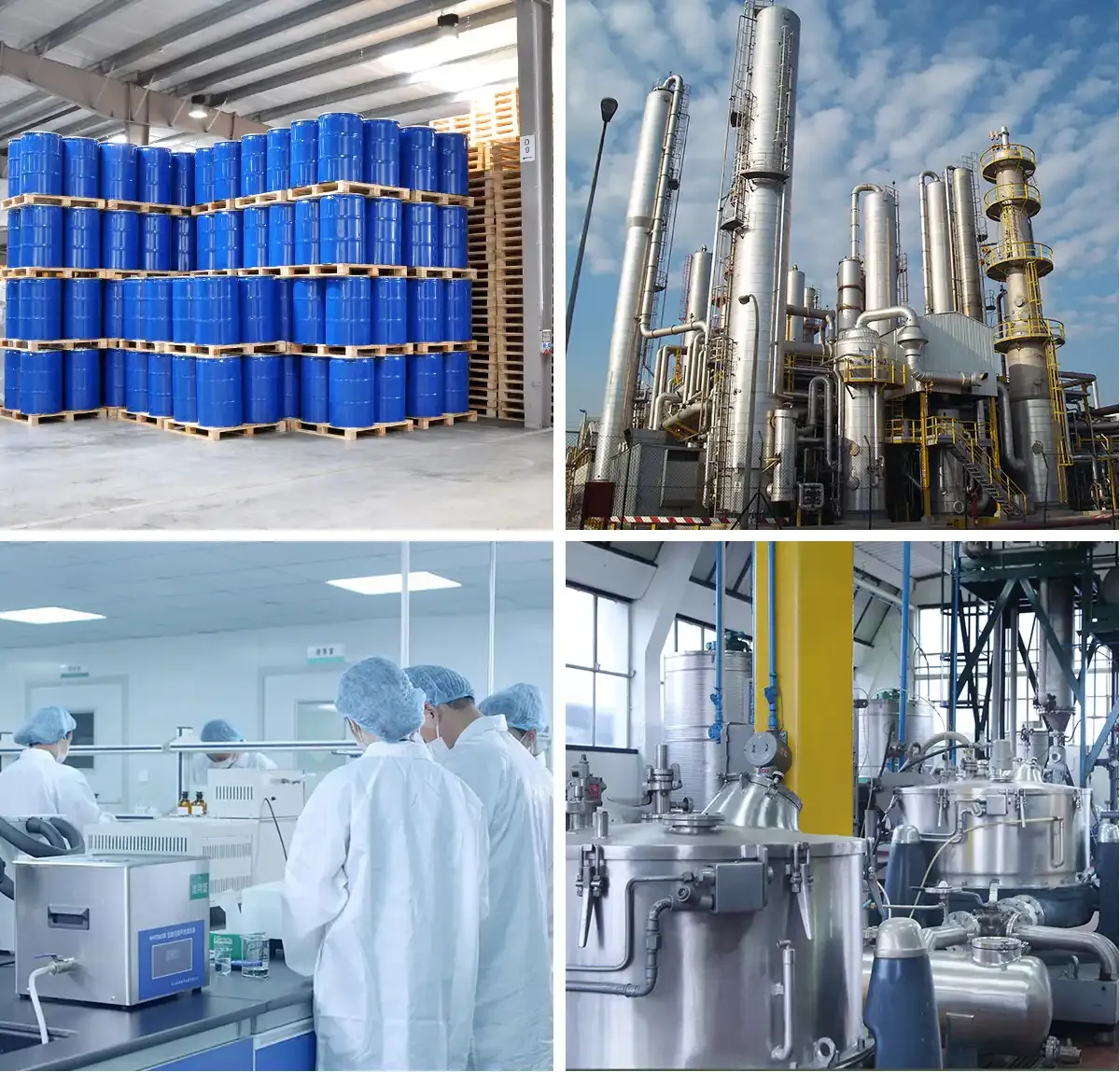

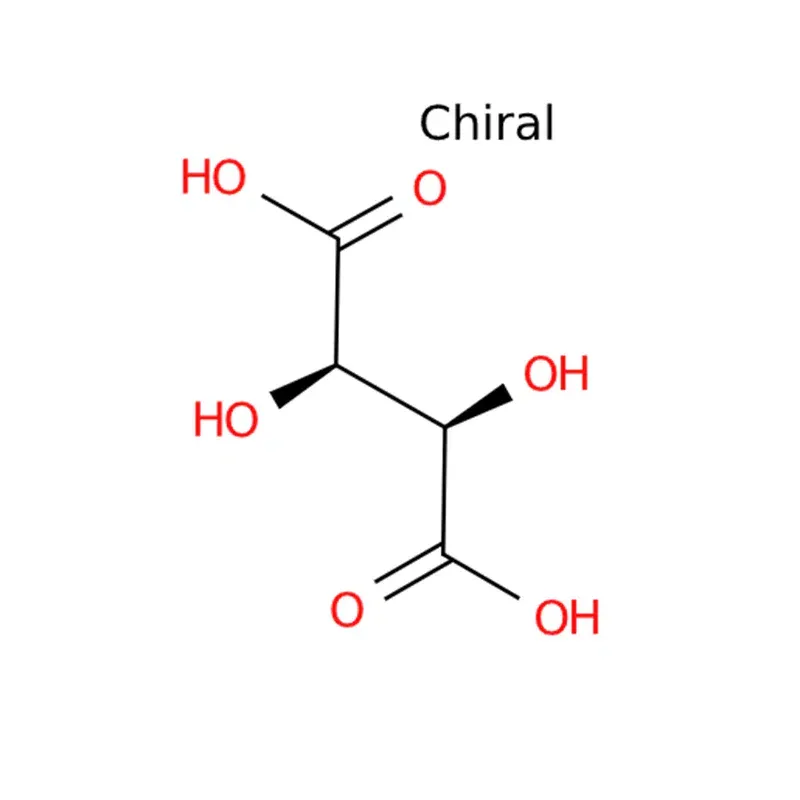
L(+)-Tartaric Acid (CAS 87-69-4) is a natural organic acid existing widely in grapes, berries and fermented wine. The product presents as colorless monoclinic crystals or white crystalline powder, odorless with a pure and intense tart taste. Combining natural source advantages and stable antioxidant activity, it serves as a high-quality natural acidulant for food and industrial formulation.
L(+)-Tartaric acid Chemical Properties
Melting point | 170-172 °C(lit.) |
alpha | 12 º (c=20, H2O) |
Boiling point | 191.59°C (rough estimate) |
bulk density | 1000kg/m3 |
density | 1.76 |
vapor density | 5.18 (vs air) |
vapor pressure | <5 Pa (20 °C) |
FEMA | 3044 | TARTARIC ACID (D-, L-, DL-, MESO-) |
refractive index | 12.5 ° (C=5, H2O) |
Fp | 210 °C |
storage temp. | Store at +5°C to +30°C. |
solubility | H2O: soluble1M at 20°C, clear, colorless |
form | Solid |
pka | 2.98, 4.34(at 25℃) |
color | White or colorless |
Odor | at 100.00 %. odorless |
PH | 3.18(1 mM solution);2.55(10 mM solution);2.01(100 mM solution); |
biological source | Vitis vinifera |
Odor Type | odorless |
Optical Rotation | [α]20/D +13.5±0.5°, c = 10% in H2O |
Water Solubility | 1390 g/L (20 ºC) |
Merck | 14,9070 |
JECFA Number | 621 |
BRN | 1725147 |
Dielectric constant | 35.9(-10℃) |
Stability: | Stable. Incompatible with oxidizing agents, bases, reducing agents. Combustible. |
InChIKey | FEWJPZIEWOKRBE-JCYAYHJZSA-N |
LogP | -1.43 |
CAS DataBase Reference | 87-69-4(CAS DataBase Reference) |
NIST Chemistry Reference | Butanedioic acid, 2,3-dihydroxy- [r-(r*,r*)]-(87-69-4) |
EPA Substance Registry System | Tartaric acid (87-69-4) |
Product Applications
Widely applicable across food, industrial and pharmaceutical fields, it acts as a premium acidulant for soft drinks, candies, baked goods and gelatin desserts. Industrially, it is used for photography processing, leather tanning, ceramic production and tartrate compound synthesis. Its commercial esters including diethyl tartrate and dibutyl tartrate are widely adopted in lacquer manufacturing and textile printing. Additionally, it functions as a pH buffering agent in pharmaceutical formulations.