

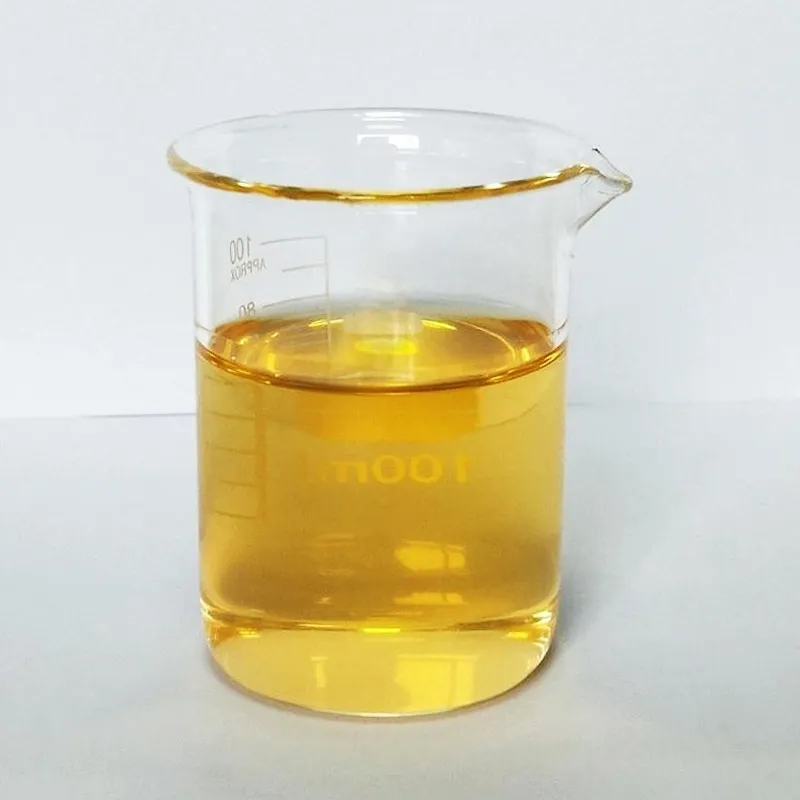
Product Description of Aniline CAS#62-53-3
Anhydrous magnesium sulfate is a magnesium‑containing inorganic salt compound. It occurs as an odorless white hygroscopic powder or crystalline solid with a characteristic bitter‑saline taste.
Upon heating, magnesium sulfate heptahydrate loses six water molecules at 150 °C and converts fully to anhydrous magnesium sulfate at 200 °C. The anhydrous material melts and decomposes at 1124 °C. It is highly soluble in water, moderately soluble in alcohol and glycerol, but insoluble in acetone. It is hygroscopic and readily absorbs moisture from ambient air. Its aqueous solution shows weak alkalinity with a pH value of 7.9 (50 g/L, 25 °C).
Anhydrous magnesium sulfate can be applied as an effective drying agent owing to its strong moisture‑absorbing capacity. Under normal storage conditions the substance remains chemically stable. It is available in fine‑powder or crystal grades, and can be directly formulated for agricultural, pharmaceutical and industrial applications.
Aniline Chemical Properties
Melting point | -6 °C (lit.) |
Boiling point | 184 °C (lit.) |
density | 1.022 g/mL at 25 °C (lit.) |
vapor density | 3.22 (185 °C, vs air) |
vapor pressure | 0.7 mm Hg ( 25 °C) |
refractive index | n20/D 1.586(lit.) |
Fp | 76 °C |
storage temp. | 2-8°C |
solubility | water: soluble |
form | Liquid |
pka | 4.63(at 25℃) |
color | APHA: ≤250 |
Specific Gravity | 1.021 |
Odor | Sweet, amine-like odor detectable at 0.6 to 10 ppm |
Relative polarity | 0.42 |
PH | 8.8 (36g/l, H2O, 20℃) |
PH Range | 8.1 |
explosive limit | 1.2-11%(V) |
Water Solubility | 36 g/L (20 ºC) |
Merck | 14659 |
BRN | 605631 |
Henry's Law Constant | 1.91 at 25 °C (thermodynamic method-GC/UV spectrophotometry, Altschuh et al., 1999) |
Exposure limits | TLV-TWA skin 2 ppm (~8 mg/m3) (ACGIH), 5 ppm (~19 mg/m3) (MSHA, OSHA, and NIOSH); IDLH 100 ppm (NIOSH). |
Dielectric constant | 7.8(0℃) |
Stability: | Stable. Incompatible with oxidizing agents, bases, acids, iron and iron salts, zinc, aluminium. Light sensitive. Combustible. |
LogP | 0.9 |
CAS DataBase Reference | 62-53-3(CAS DataBase Reference) |
IARC | 2A (Vol. 27, Sup 7, 127) |
NIST Chemistry Reference | Aniline(62-53-3) |
EPA Substance Registry System | Aniline (62-53-3) |
Hazard Codes | T,N,F |
Risk Statements | 23/24/25-40-41-43-48/23/24/25-50-68-48/20/21/22-39/23/24/25-11 |
Safety Statements | 26-27-36/37/39-45-46-61-63-36/37-16 |
RIDADR | UN 1547 6.1/PG 2 |
OEL | TWA: None ppm |
WGK Germany | 2 |
RTECS | BW6650000 |
F | 46243 |
Autoignition Temperature | 615 °C |
TSCA | Yes |
HS Code | 2921 41 00 |
HazardClass | 6.1 |
PackingGroup | II |
Hazardous Substances Data | 62-53-3(Hazardous Substances Data) |
Toxicity | LD50 orally in rats: 0.44 g/kg (Jacobson) |
IDLA | 100 ppm |
Product Usage
Aniline has long been a vital industrial chemical. Its major end use lies in the manufacturing of polyurethanes and rubber goods. Minor consumption covers pesticides (herbicides, fungicides, insecticides and animal repellents), defoliants, dyes, antioxidants, antidegradants and vulcanization accelerators.
Besides, aniline is an ingredient in selected household products, including stove polish, shoe polish, paints, varnishes and marking inks.


