Product Details
Product Description of Polypropylene (PP)
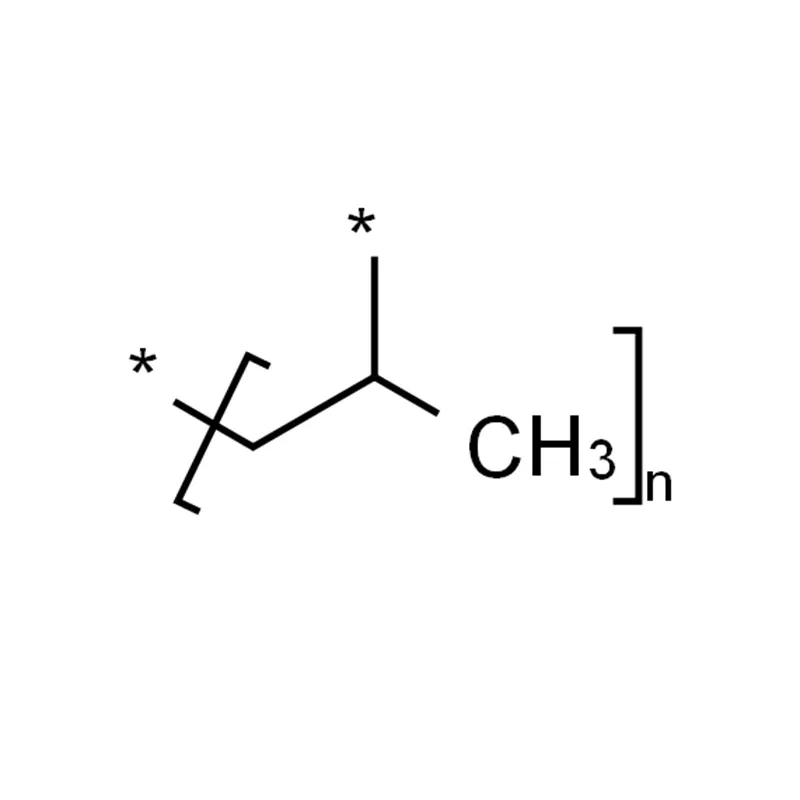
Polypropylene (PP) is a high-molecular-weight polymer derived from propylene monomers. Based on the polymerization method, its production can be divided into five main processes: solution polymerization, slurry polymerization, bulk polymerization, gas-phase polymerization, and combined bulk–gas-phase polymerization. Structurally, polypropylene is mainly classified into isotactic, syndiotactic, and atactic forms, among which isotactic polypropylene is the most widely used, accounting for over 90% of all applications.
Atactic polypropylene is suitable for use as additives, adhesives, and modifiers. Thanks to its high viscosity, good flow properties, and excellent coating performance, it serves as an effective carrier for modified masterbatches. Syndiotactic polypropylene boasts advantages such as high transparency, toughness, and flexibility, though its rigidity and hardness are only about half of those of isotactic PP. It can be vulcanized similarly to ethylene-propylene rubber, producing elastomers with mechanical properties superior to conventional rubber.
Currently, its wider application is limited by its higher cost; however, syndiotactic polypropylene has strong development potential. It is regarded as a promising new growth point for polypropylene resins and an emerging synthetic resin for advanced material modification.
Chemical Properties
| English Name | Polypropylene |
| English Synonyms | PROPYLENE RESIN;PROPYLENE, ISOTACTIC RESIN;POLYPROPYLENE;POLYPROPYLENE, ATACTIC;POLYPROPY LENE, PSS NANOREINFORCED;POLYPROPYLENE, ISOTACTIC;Polypropylene master batch,flame retarding;Po lypropylene,film grade |
| CAS Number | 9003-07-0 |
| Molecular Formula | C22H4203 |
| Molecular Weight | 42.08 |
| EINECS Number | 202-316-6 |
| Melting point | 157 °C |
| Boiling point | 120-132 °C |
| Density | 0.9 g/mL at 25 °C (lit.) |
| Refractive index | n20/D 1.49 (lit.) |
| Flash point | >470 |
| Storage conditions | -20°C |
| Appearance | Particles (spherical) |
| Color | red |
| Odor (Odor) | Odorless |
| Biological origin | human |
| Merck | 137,663 |
Polypropylene features excellent processing properties and can be molded via various methods to produce a wide variety of products for diverse applications. Injection-molded polypropylene is particularly common, with general-purpose PP being the primary material for daily consumer goods. In the automotive, home appliance, and industrial fields, both neat and modified polypropylene are extensively used. For example, toughened PP is commonly applied in automobile bumpers and wheel covers, while reinforced PP is used in dashboards, steering wheels, fan blades, and handles.