

Product Details
Carboxymethyl cellulose CAS#9000-11-7
CMC is an important cellulose ether, a water-soluble anionic polymer modified chemically from natural fibers. It dissolves in both cold and hot water. It features valuable physicochemical properties such as emulsifying and dispersing capacity, anti-degradation performance and physiological inertness. Therefore, it is a widely applied natural polymer derivative.
Carboxymethyl cellulose Chemical Properties
| density | 1.050 g/cm3(Temp: 15-18 °C) |
| FEMA | 2239 | CARBOXYMETHYLCELLULOSE |
| storage temp. | 2-8°C |
| solubility | Practically insoluble in anhydrous ethanol. It swells with water to form a suspension and becomes viscid in 1 M sodium hydroxide. |
| form | preswollen, microgranular |
| color | White to off-white |
| Odor | odorless |
| Stability: | Stable. Combustible. Incompatible with strong oxidizing agents. |
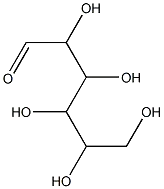
| InChI | InChI=1S/C6H12O6/c7-1-3(9)5(11)6(12)4(10)2-8/h1,3-6,8-12H,2H2 |
| InChIKey | GZCGUPFRVQAUEE-UHFFFAOYSA-N |
| SMILES | C(=O)C(O)C(O)C(O)C(O)CO |
| LogP | -3.17 |
| CAS DataBase Reference | 9000-11-7(CAS DataBase Reference) |
| EPA Substance Registry System | Cellulose, carboxymethyl ether (9000-11-7) |
Safety Information
| WGK Germany | 1 |
| RTECS | FJ5700000 |
| HS Code | 3912310000 |
| Toxicity | LD50 unreported in mammal (species unspecified): 13340mg/kg |
Product Usage
Food Applications
As an efficient thickener and stabilizer, CMC improves food texture and mouthfeel via viscosity enhancement. For instance, it delivers smooth texture for ice cream and avoids whey separation in yogurt. It can also work synergistically with proteins and starches to prevent phase separation and extend shelf life. For low-fat food products, it serves as a fat substitute to replicate the smooth and creamy texture of conventional products.
Battery Applications
In zinc-manganese batteries and lithium-ion batteries, CMC works as an electrolyte thickener. It forms a gel network to stabilize electrolyte and avoid liquid leakage, facilitate ion migration and boost electrical conductivity. When used in electrodes, it acts as a binder, strengthening adhesion between active materials and current collectors, and mitigating structural degradation during repeated charge and discharge cycles.
Pharmaceutical Applications
It serves as a tablet binder and sustained-release carrier in pharmaceuticals, optimizing tablet forming performance and regulating drug release speed. When applied in medical dressings, it forms a moisturized gel layer to facilitate wound healing. Meanwhile, it features outstanding biocompatibility and high safety.