

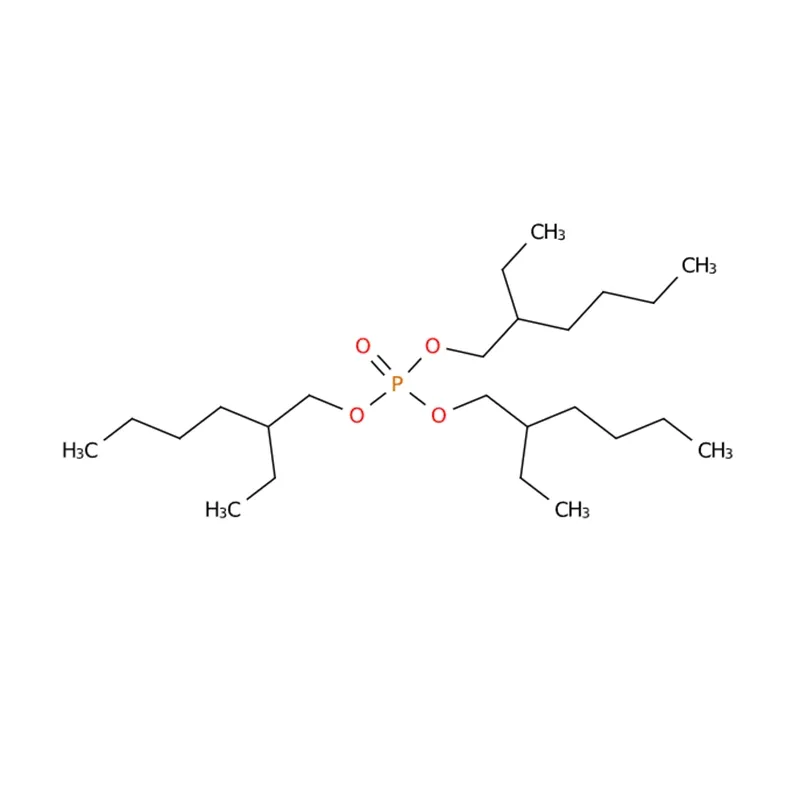
Product Description of Phosphoric Acid (CAS#78-42-2)
Phosphoric acid is extensively utilized in the chemical industry as a flame retardant, plasticizer, and extraction agent. One of its most significant applications is in the production of hydrogen peroxide, playing an indispensable role in ensuring stable and efficient processing.
In the manufacture of trioctyl phosphate (TOP), phosphoric acid serves as a solvent for hydroanthraquinone systems. This solvent system boasts high solubility for hydroanthraquinone derivatives, a favorable distribution coefficient of hydrogen peroxide between the aqueous and solvent phases, as well as a high boiling point and high flash point—all of which collectively ensure efficient and safe industrial processing.
Phosphoric Acid Chemical Propertie
| Melting point | -70°C |
| Boiling point | 215 °C4 mm Hg(lit.) |
| Density | 0.92 g/mL at 20 °C(lit.) |
| Vapor pressure | 2.1 mm Hg ( 20 °C) |
| Refractive index | n20/D 1.444(lit.) |
| Fp | >230 °F |
| Storage temp | Store below +30°C. |
| Solubility | <0.001g/l |
| Form | Liquid |
| Specific Gravity | 0.93 |
| Color | Colourless |
| PH | 7 (H2O, 20℃) |
| Water Solubility | <0.1 g/100 mL at 18 ºC |
| BRN | 1715839 |
| CAS DataBase Reference | 78-42-2(CAS DataBase Reference) |
| NIST Chemistry Reference | 2-Ethylhexanol phosphate (3:1)(78-42-2) |
| EPA Substance Registry System | Tris(2-ethylhexyl) phosphate (78-42-2) |
Product Application of Phosphoric Acid (CAS#78-42-2)
Phosphoric acid (CAS#78-42-2) has important applications in the production of hydrogen peroxide and PVC processing. In the anthraquinone process for hydrogen peroxide production, it can serve as a substitute for hydroterpineol, which not only helps achieve higher product concentration but also improves product quality and reduces self-consumption during the operation process, effectively optimizing the production efficiency of hydrogen peroxide.
In addition, it is also suitable for use as a cold-resistant plasticizer in PVC applications. When added to PVC products, it can significantly enhance the low-temperature performance of PVC, making the material more flexible and durable under low-temperature conditions, thus expanding the application scope of PVC products in cold environments.
Phosphoric Acid Safety Information
| Hazard Codes | Xi |
| Risk Statements | 38 |
| Safety Statements | 23-43-24/25 |
| WGK Germany | 2 |
| RTECS | MP0770000 |
| Autoignition Temperature | 370 °C |
| TSCA | Yes |
| HS Code | 29190090 |
| Hazardous Substances Data | 78-42-2(Hazardous Substances Data) |
| Toxicity | LD50 orally in Rabbit: 37000 mg/kg LD50 dermal Rabbit 20000 mg/kg |


