

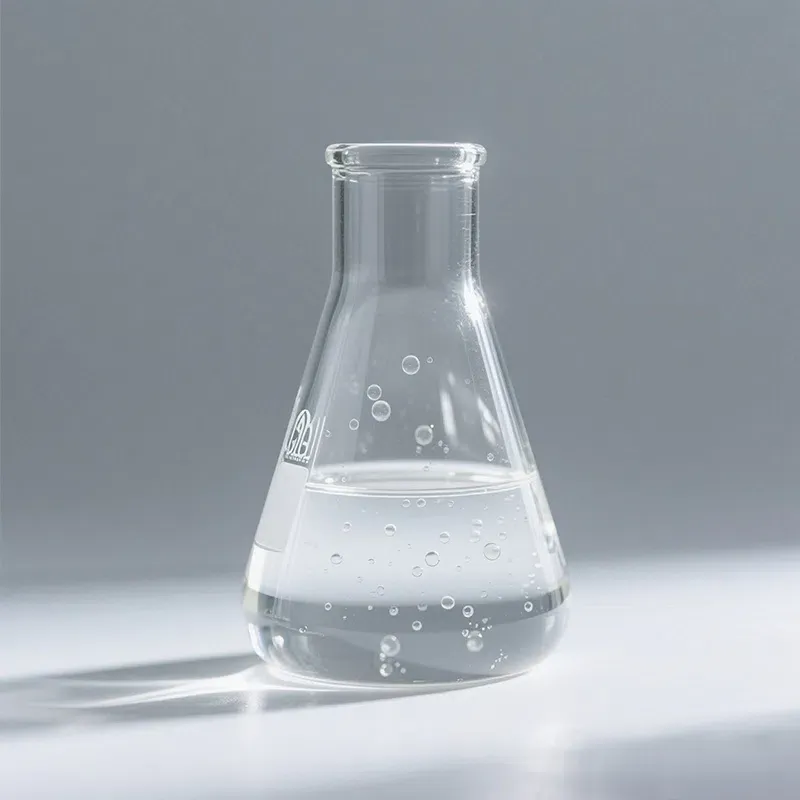
Products Description of 4-Methylmorpholine CAS#109-02-4
4-Methylmorpholine (also named N-Methylmorpholine) is an important organic intermediate with broad industrial uses. It acts as a high-performance solvent, emulsifier and corrosion inhibitor, and is a preferred catalyst for polyurethane foam production. It can also be utilized as an intermediate for agrochemical synthesis.
Common synthetic routes include N-methylation of morpholine, cyclization reaction from diethanolamine, and synthesis based on dichloroethane.
4-Methylmorpholine Chemical Properties
| Melting point | −66 °C(lit.) |
| Boiling point | 115-116 °C750 mm Hg(lit.) |
| density | 0.92 g/mL at 25 °C(lit.) |
| vapor density | >1 (vs air) |
| vapor pressure | 18 mm Hg ( 20 °C) |
| refractive index | n20/D 1.435(lit.) |
| Fp | 75 °F |
| storage temp. | Store below +30°C. |
| solubility | Chloroform (Soluble), Ethyl Acetate, Methanol (Slightly) |
| form | Liquid |
| pka | 7.38(at 25℃) |
| color | Clear |
| Specific Gravity | 0.920 (20/4℃) |
| PH | 10.6 (50g/l, H2O, 20℃) |
| explosive limit | 2.1%(V) |
| Water Solubility | >500 g/L (20 ºC) |
| Merck | 146277 |
| BRN | 102719 |
| Stability: | Volatile |
| InChIKey | SJRJJKPEHAURKC-UHFFFAOYSA-N |
| LogP | -0.32 at 25℃ |
| CAS DataBase Reference | 109-02-4(CAS DataBase Reference) |
| NIST Chemistry Reference | Morpholine, 4-methyl-(109-02-4) |
| EPA Substance Registry System | 4-Methylmorpholine (109-02-4) |
| Hazard Codes | F,C |
| Risk Statements | 11-20/21/22-34-10-22 |
| Safety Statements | 16-26-36/37/39-45-25 |
| RIDADR | UN 2535 3/PG 2 |
| WGK Germany | 1 |
| RTECS | QE5775000 |
| F | 46318 |
| Autoignition Temperature | 165 °C DIN 51794 |
| TSCA | Yes |
| HazardClass | 3 |
| PackingGroup | II |
| HS Code | 29349990 |
| Toxicity | LD50 orally in Rabbit: 1960 mg/kg LD50 dermal Rabbit 1240 mg/kg |
Product Application of 4-Methylmorpholine CAS#109-02-4
4-Methylmorpholine (N-Methylmorpholine) is a heterocyclic tertiary amine and a key raw material for fine chemical manufacturing. It is extensively employed as a catalyst for polyurethane foam production, pharmaceutical synthesis and other organic synthesis processes. It acts as a vital intermediate for the manufacture of pharmaceuticals, agrochemicals, surfactants, emulsifiers and corrosion inhibitors. Besides, it can be used as a solvent, extractant and curing agent for polyurethane coating systems.


