

Product Details
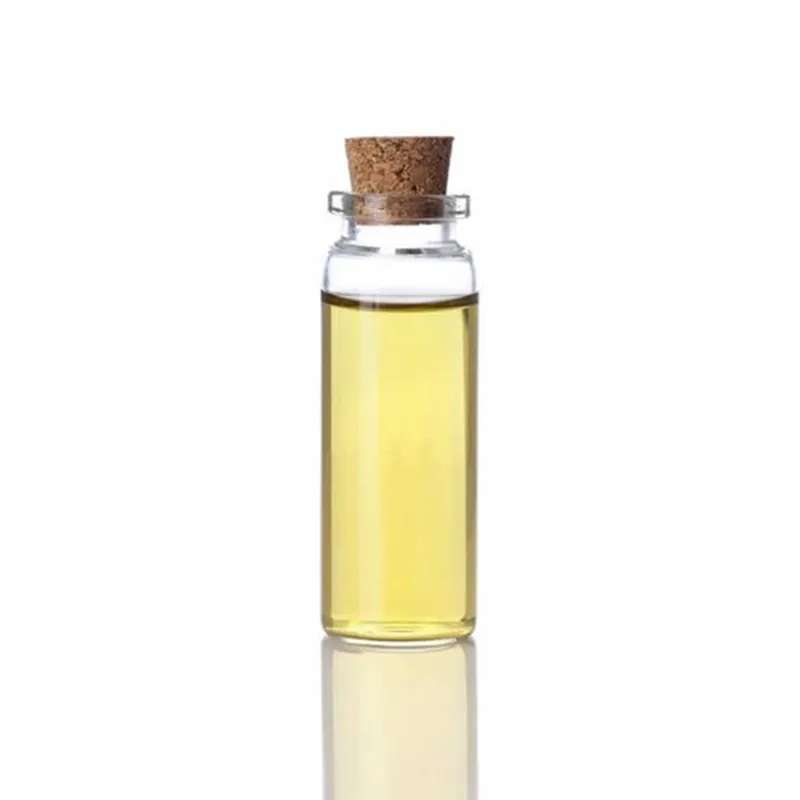
Products Description of Benzylamine CAS#100-46-9 Benzylamine is an organic compound with the molecular formula C₇H₉N. It is a light amber liquid, miscible with water, ethanol and ether. It dissolves in acetone and benzene, and shows slight solubility in chloroform. Benzylamine is mainly adopted as a precipitant in microscopic and microcrystalline analysis, for the assay of multiple elements and compounds such as molybdate, borate, tungstate, thorium, zirconium, cerium, lanthanum, praseodymium and neodymium.
Benzylamine Chemical Properties
| Melting point | 10 °C (lit.) |
| Boiling point | 184-185 °C (lit.) |
| density | 0.981 g/mL at 25 °C (lit.) |
| vapor pressure | 1.2 hPa (20 °C) |
| refractive index | n20/D 1.543(lit.) |
| Fp | 140 °F |
| storage temp. | Store below +30°C. |
| solubility | alcohol: miscible |
| form | Liquid |
| pka | 9.33(at 25℃) |
| color | Clear colorless to slightly yellow |
| PH | 11.4 (100g/l, H2O, 20℃) |
| Odor | Strong ammonia. |
| explosive limit | 0.7-8.2%(V) |
| Water Solubility | soluble |
| Sensitive | Air Sensitive |
| Merck | 141125 |
| BRN | 741984 |
| Dielectric constant | 4.6(Ambient) |
| Stability: | Combustible. Incompatible with strong oxidizing agents, strong acids. |
| InChIKey | WGQKYBSKWIADBV-UHFFFAOYSA-N |
| LogP | 1 at 25℃ |
| CAS DataBase Reference | 100-46-9(CAS DataBase Reference) |
| NIST Chemistry Reference | Benzylamine(100-46-9) |
| EPA Substance Registry System | Benzylamine (100-46-9) |
| Hazard Codes | C |
| Risk Statements | 21/22-34 |
| Safety Statements | 26-36/37/39-45 |
| RIDADR | UN 2735 8/PG 2 |
| WGK Germany | 1 |
| RTECS | DP1488500 |
| F | 34 |
| Autoignition Temperature | 405 °C |
| TSCA | Yes |
| HS Code | 2921 49 00 |
| HazardClass | 8 |
| PackingGroup | II |
| Hazardous Substances Data | 100-46-9(Hazardous Substances Data) |
| Toxicity | LD50 orally in Rabbit: 552 mg/kg LD50 dermal Rat 1350 mg/kg |
Product Application of Benzylamine CAS#100-46-9
Benzylamine functions as a precipitant in microcrystalline analysis to detect molybdates, vanadates, tungstates, thorium, zirconium, cerium, lanthanum, praseodymium and neodymium. For organic analysis, it differentiates various carboxylic acids: it reacts with carboxylic esters to produce N-benzylamine derivatives, and the corresponding acids can be recognized according to their distinct melting points. It is also applied in the qualitative inspection of organometallic compounds.
Moreover, it acts as a precipitant for microcrystalline analysis targeting molybdates, vanadates, tungstates, titanium, cobalt, cerium, lanthanum, praseodymium and neodymium. Besides, benzylamine is an important intermediate for the production of dyestuffs, pharmaceuticals and polymers.