
Product Details
Shikimic acid is a white crystalline substance with excellent water solubility. It is named after Illicium anisatum (Japanese shikimi grass), the plant from which it was originally isolated. This compound acts as a crucial metabolic intermediate in plants and microorganisms.
Traditionally, it is mainly extracted from the dried ripe fruits of Illicium plants, especially Japanese star anise (Illicium anisatum). At present, alternative extraction approaches have also been researched and developed, such as isolating shikimic acid from the fruits of Liquidambar formosana and pine needles.
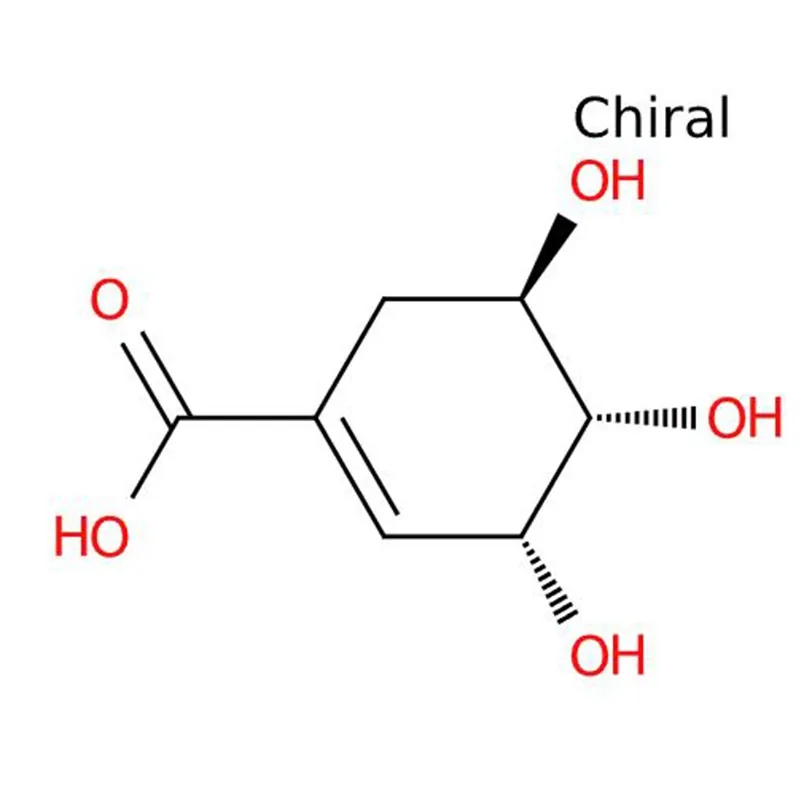
It is a white crystalline cyclohexene carboxylic acid, with a water solubility of 180 g/L at 20°C. Featuring three chiral centers with the 3R,4S,5R configuration, it serves as a key biochemical precursor for aromatic amino acids including phenylalanine, tyrosine and tryptophan in the shikimate pathway.
Key Properties & Specifications
| Parameter | Value |
| Molecular Weight | 174.15 g/mol |
| Melting Point | 185-187°C (decomp.) |
| Specific Rotation | [α]₂₀ᴰ = -171° (c=1, H₂O) |
| pKa Values | pKa₁=4.04, pKa₂=5.85 |
| Log P (octanol-water) | -1.38 |
| UV Absorption | λ<sub>max</sub> = 214 nm |
| Thermal Stability | Degrades >200°C |
Production Methods & Sources
1. Traditional Plant Extraction
| Source | Shikimic Acid Yield | Extraction Process |
| Japanese Star Anise (Illicium anisatum) | 3-5% dry weight | - Acid hydrolysis (H₂SO₄) - Ion-exchange purification |
| Chinese Star Anise (I. verum) | 5-8% dry weight | - Ethanol reflux - Crystallization (pH 3.5) |
| Sweetgum (Liquidambar spp.) | 1.2-2.1% dry weight | - Alkaline hydrolysis - Activated carbon filtration |
| Pine Needles (Pinus spp.) | 0.3-0.8% dry weight | - Supercritical CO₂ extraction - HPLC isolation |
2. Fermentation (Dominant Industrial Method)
Engineered E. coli: Yields >70 g/L (glucose feedstock)
Strain: E. coli K12/ΔaroL/ΔaroK
Fermentation: 37°C, pH 7.0, 60 hrs
3. Chemical Synthesis
Asymmetric Route: Diels-Alder of furan with acrylic acid (enantiomeric excess >98%)
Cost: $2,500/kg (vs. $400/kg for fermentation)
Industrial Applications
Pharmaceutical SynthesisFor Oseltamivir Phosphate (Tamiflu®), it serves as a core key intermediate, accounting for 70% of global shikimic acid (SA) demand, with the synthetic route: Shikimate→10-step reaction→Oseltamivir. It also applies to synthesizing antiviral drugs including Zanamivir (Relenza®) and Peramivir, as well as antibiotics such as chloramphenicol and Mycobacterium inhibitors.
BiotechnologyIt supports shikimate pathway engineering for CRISPR-modified crops (e.g., drought-resistant maize), and acts as a chiral synthon for preparing unnatural amino acids in biocatalytic processes.
Food & AgricultureIt functions as a plant elicitor to boost phenolic compound synthesis in grapes and improve wine quality; it also serves as a preservative that inhibits Escherichia coli O157:H7 with an MIC value of 12.5 mg/mL.
CosmeticsIt acts as a tyrosinase inhibitor for skin brightening (usage content: 0.5%-2% in serum products), and exerts anti-inflammatory effects by reducing TNF-α in keratinocytes.
Technical Grades & Specifications
| Grade | Purity | Key Impurities | Applications |
| Pharma Grade | >99.5% | Aromatic AA <0.1% | Antiviral synthesis |
| Food Grade | >98.0% | Heavy metals <10 ppm | Functional ingredients |
| Research Grade | >99.9% | Endotoxin <0.01 EU/mg | Enzyme kinetics studies |
| Industrial | >95.0% | Water <0.5% | Agrochemical synthesis |
Packaging Options
| Format | Capacity | Material |
| Glass Vials | 1-100 g | Amber glass + PTFE seal |
| HDPE Bottles | 0.5-5 kg | Nitrogen headspace |
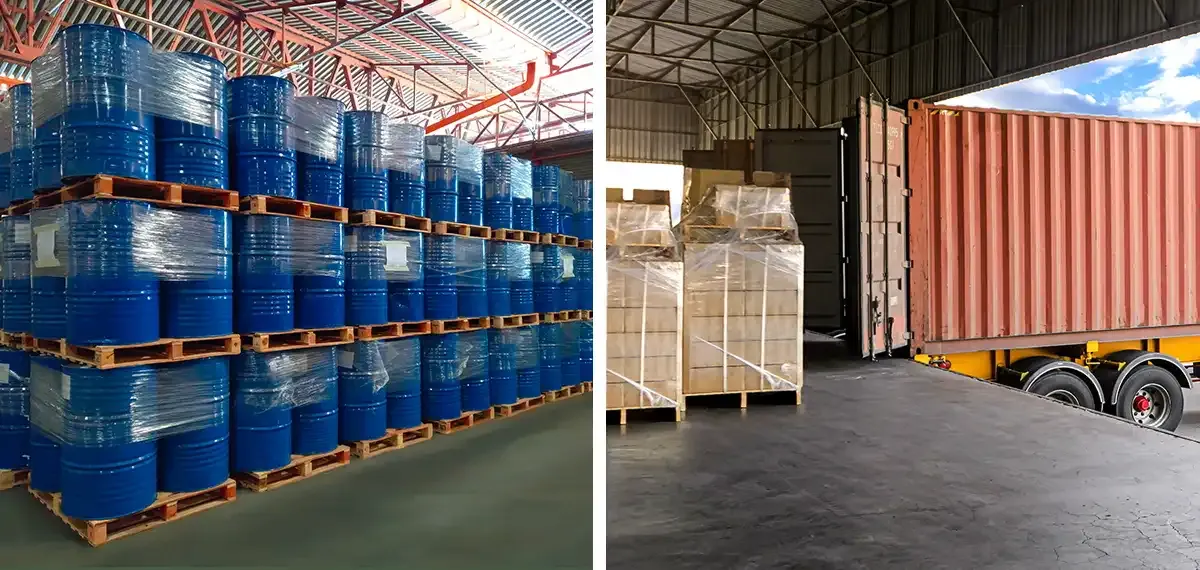
| Fiber Drums | 25 kg | Double PE liner |
| Custom Bulk | >100 kg | Vacuum-sealed bags |