

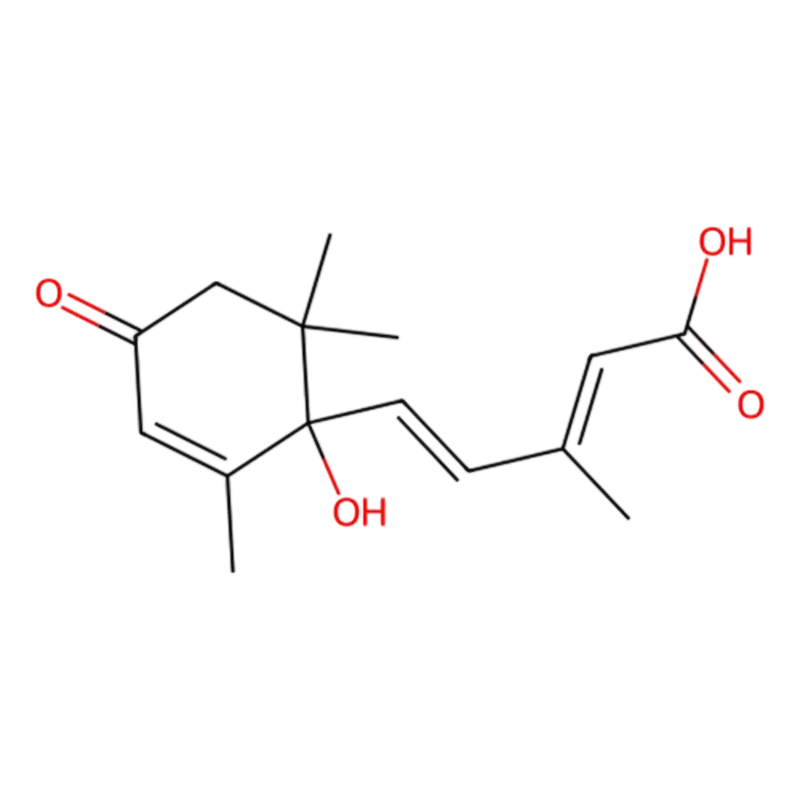
Product Details
Abscisic Acid (CAS# 21293-29-8) usually presents as a white to off-white crystalline powder. It shows good solubility in sodium bicarbonate solution, chloroform, acetone, diethyl ether and ethyl acetate, but only sparingly dissolves in water, benzene and petroleum ether.
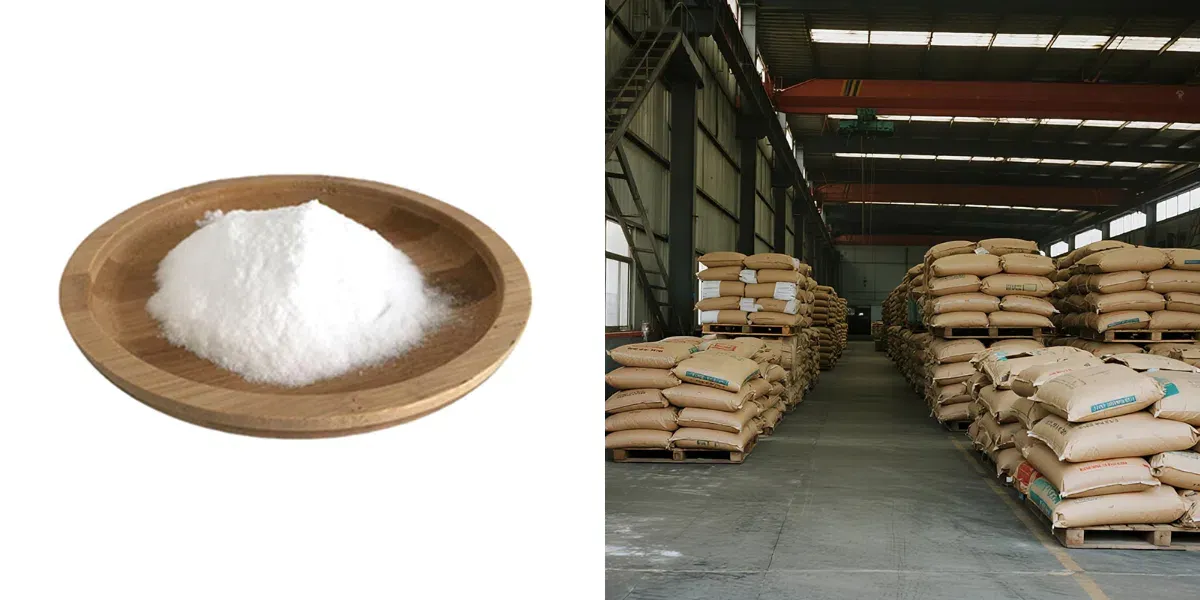
Parameters
Melting point | 188 °C |
alpha | D20 +411.1° (c = 1 in ethanol); D20 +426.5° (c = 1 in 0.005N methanolic H2SO4) |
Boiling point | 327.55°C (rough estimate) |
density | 1.0583 (rough estimate) |
refractive index | 410 ° (C=0.2, EtOH) |
storage temp. | 2-8°C |
solubility | Chloroform (Slightly), Ethanol (Sparingly), Methanol (Slightly) |
pka | 4.87±0.33(Predicted) |
form | Off-white powder |
color | White to Pale Yellow |
optical activity | [α]/D 415±10°, c = 0.1 in ethanol |
Merck | 14,11 |
BRN | 2698956 |
Stability: | Light Sensitive |
InChIKey | JLIDBLDQVAYHNE-WEYXYWBQSA-N |
LogP | 1.896 (est) |
CAS DataBase Reference | 21293-29-8(CAS DataBase Reference) |
EPA Substance Registry System | 2,4-Pentadienoic acid, 5-[(1S)-1-hydroxy-2,6,6-trimethyl-4-oxo-2-cyclohexen-1-yl]-3-methyl-, (2Z,4E)- (21293-29-8) |
Safety Information
Safety Statements | 22-24/25 |
WGK Germany | 3 |
RTECS | RZ2475100 |
F | 8 |
HS Code | 29189900 |
Application
As a crucial phytohormone, abscisic acid participates in regulating numerous physiological activities during the entire growth cycle of plants. It promotes defoliation, suppresses plant growth, and induces dormancy. Moreover, it stimulates stomatal closure, affects the development of seed embryos, and enhances plant tolerance to adverse environments such as drought, low temperature and salt stress. This multifunctional hormone is widely applied in agricultural production, ecological restoration and other related fields.