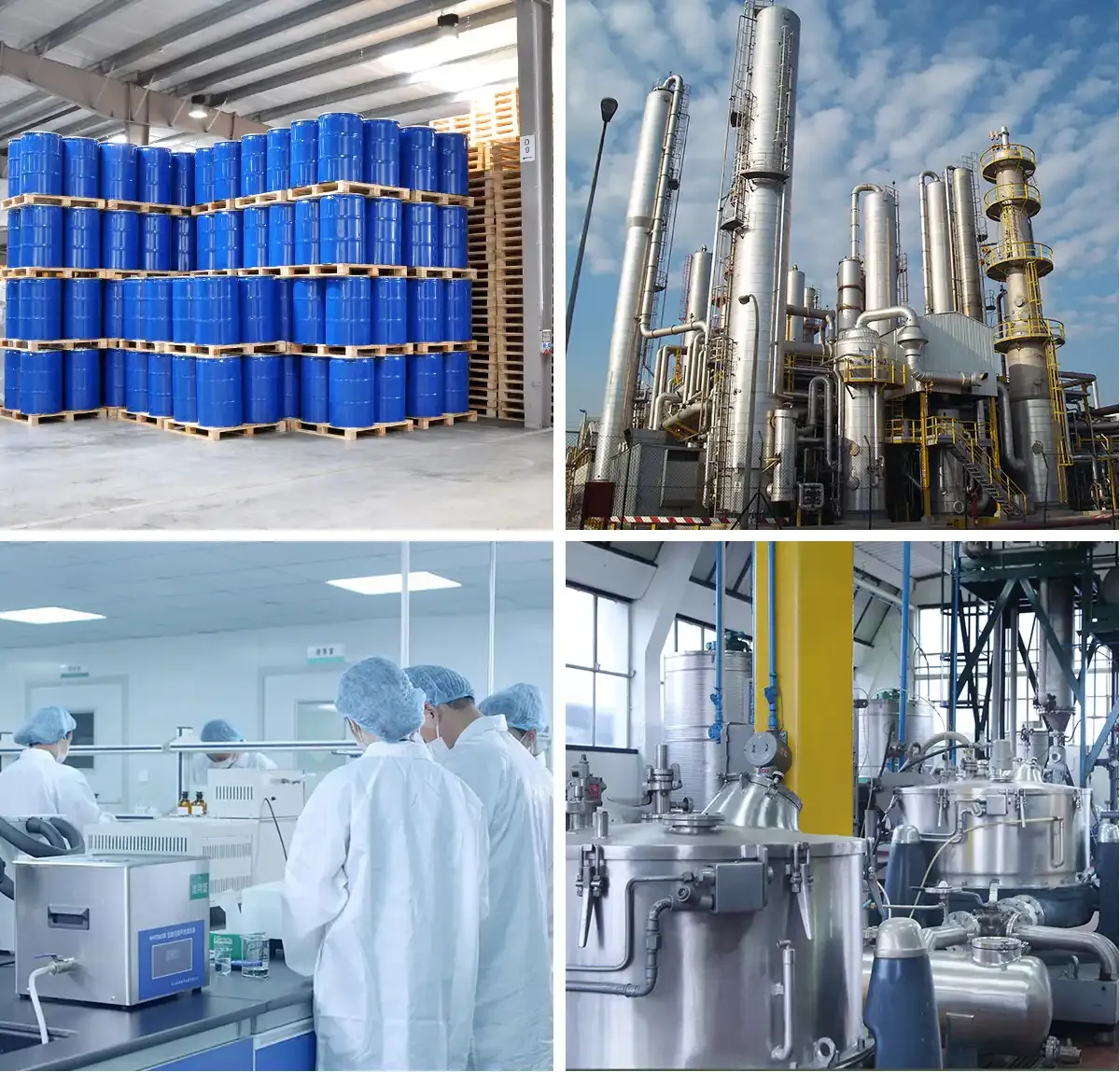


Product Description
Polymethylene polyphenyl polyisocyanate is a brown transparent liquid with a typical pungent odor at room temperature. As a polymeric aromatic isocyanate, it features stable molecular structure, moderate viscosity and excellent cross-linking activity. Insoluble in water, it can be well dissolved and miscible with most conventional organic solvents, ensuring convenient formulation and industrial processing.
Polymethylene polyphenyl polyisocyanate Chemical Properties
Boiling point | 392 °C5 mm Hg |
density | 1.2 g/mL at 25 °C(lit.) |
vapor density | 8.6 (vs air) |
refractive index | n20/D 1.634 |
Fp | >230 °F |
storage temp. | Refrigerator, Under inert atmosphere |
solubility | DMSO (Sparingly), Ethyl Acetate (Slightly), Methanol (Soluble) |
form | Oil |
color | Yellow to Orange |
Stability: | Stable. Incompatible with strong oxidizing agents, alcohols. May decompose in moist air, or on contact with water. |
InChI | InChI=1S/C7H5NO.CH2O/c9-6-8-7-4-2-1-3-5-7;1-2/h1-5H;1H2 |
InChIKey | JTEOXXUIKUHXLD-UHFFFAOYSA-N |
SMILES | O=C=NC1C([H])=C([H])C([H])=C([H])C=1[H].O=C([H])[H] |
IARC | 3 (Vol. 19, Sup 7) 1987 |
EPA Substance Registry System | Polymeric diphenylmethane diisocyanate (9016-87-9) |
Safety Information
Hazard Codes | Xn,T+,T,F |
Risk Statements | 20-36/37/38-42-42/43-26-22-39/23/24/25-23/24/25-11-20/21/22 |
Safety Statements | 26-28-38-45-36/37-23-16-7-36 |
WGK Germany | 3 |
RTECS | TR0350000 |
Hazardous Substances Data | 9016-87-9(Hazardous Substances Data) |
Product Application of Polymethylene Polyphenyl Polyisocyanate (CAS#9016-87-9)
Polymethylene polyphenyl polyisocyanate is a key raw material for synthesizing polyurethane polymers. It is extensively deployed across multiple industrial sectors:
Construction field: Fabrication of thermal insulation rigid foam and construction sealants
Automobile manufacturing: Production of shock-absorbing and sound-insulating polyurethane interior materials
Electrical industry: Insulation filling materials for electrical components and equipment
Household goods: Elastic polyurethane foam for mattresses and upholstered cushions