
Products Description
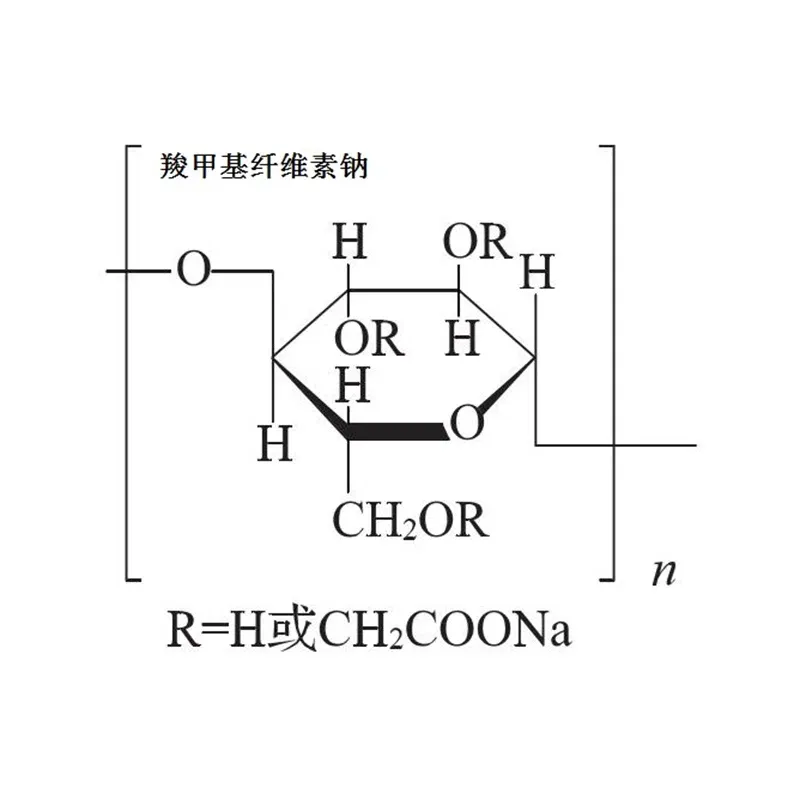
Sodium carboxymethyl cellulose (CMC), alternatively named cellulose gum, is a carboxymethyl‑modified derivative sourced from natural cellulose and ranks among the major anionic cellulose ethers. It is manufactured via the chemical reaction between cellulose, caustic soda and monochloroacetic acid, yielding an anionic polymer whose molecular weight varies from several thousand up to several millions.
CMC occurs as white or milky‑white fibrous powder or granules, with a density of 0.5‑0.7 g/cm³. It is practically odour‑free, tasteless and hygroscopic. The powder disperses readily in water to generate clear colloidal solutions, yet it cannot dissolve in organic solvents including ethanol. A 1 % aqueous CMC solution registers a pH value of 6.5‑8.5, delivering best functional performance under neutral conditions. Its viscosity drops sharply when pH falls below 5 or rises above 10.
CMC possesses favourable thermal‑stability properties. Its viscosity rises quickly at temperatures under 20 °C and varies moderately at approximately 45 °C. Nevertheless, extended heating above 80 °C will trigger colloid denaturation and lead to performance deterioration. CMC maintains excellent stability within alkaline media, whereas it tends to undergo hydrolysis under acidic surroundings; precipitation will take place at pH 2‑3 or when multivalent metal salts are present. Solid‑state CMC keeps stable under ambient temperature and light exposure, permitting long‑term storage in dry surroundings.
Chemical Properties
| Melting point | 274 °C (dec.) |
| Density | 1,6 g/cm3 |
| FEMA | 2239 | CARBOXYMETHYLCELLULOSE |
| Storage temp | room temp |
| Solubility | H2O: 20 mg/mL, soluble |
| Form | low viscosity |
| Pka | 4.30(at 25℃) |
| Color | White to light yellow |
| PH | pH (10g/l, 25℃) 6.0~8.0 |
| Odor | Odorless |
| PH Range | 6.5 - 8.5 |
| Water Solubility | soluble |
| Merck | 141829 |
| Stability | Stable. Incompatible with strong oxidizing agents. |
| EPA Substance Registry System | Sodium carboxymethyl cellulose (9004-32-4) |
| Risk Statements | 40 |
| Safety Statements | 24/25 |
| WGK Germany | 1 |
| RTECS | FJ5950000 |
| F | 3 |
| Autoignition Temperature | 698 °F |
| TSCA | Yes |
| HS Code | 39123100 |
| Toxicity | LD50 oral in rabbit: > 27gm/kg |
Product Application
Sodium carboxymethyl cellulose acts as a thickening, stabilizing and emulsifying agent, finding broad application across numerous industrial sectors.
Food‑grade CMC delivers multiple functional attributes including thickening, emulsification, mould‑forming, water retention and stabilization. Added into food formulations, it helps cut manufacturing costs, improves product quality and sensory experience, and prolongs shelf‑life. It is extensively applied in solid and liquid drinks, canned goods, confectionery, bakery cakes, meat products, biscuits, instant noodles, pre‑cooked food and quick‑frozen items. It is also commonly used in soya‑bean milk, yoghurt, peanut milk, fruit tea, fruit juice and other similar products. The recommended addition rate of CMC differs according to individual food categories.